Perceptual Equivalence in virtual Reality For authEntiC Training
Project Overview
PERFECT aims to be the first step towards the creation of highly reliable multisensory virtual environments for training and simulation that delivers Perceptually Equivalent stimuli and thus enables the certification of trainees using only Virtual Reality (VR) technologies. This project represents a multidisciplinary approach where the existing knowledge within the research team can be explored to its full potential from the computer science, psychology and biomedical fields.
By achieving the PERFECT objectives, we will be a step closer to achieve our long term goal and thus have an important impact on how VR can help people to train in a safer and affordable way while making sure they will perform as expected when faced with a real situation.
Recent evolutions in Virtual Reality (VR) technologies are creating new business opportunities. Training and certification is one area of application
The PERFECT Project Symposium
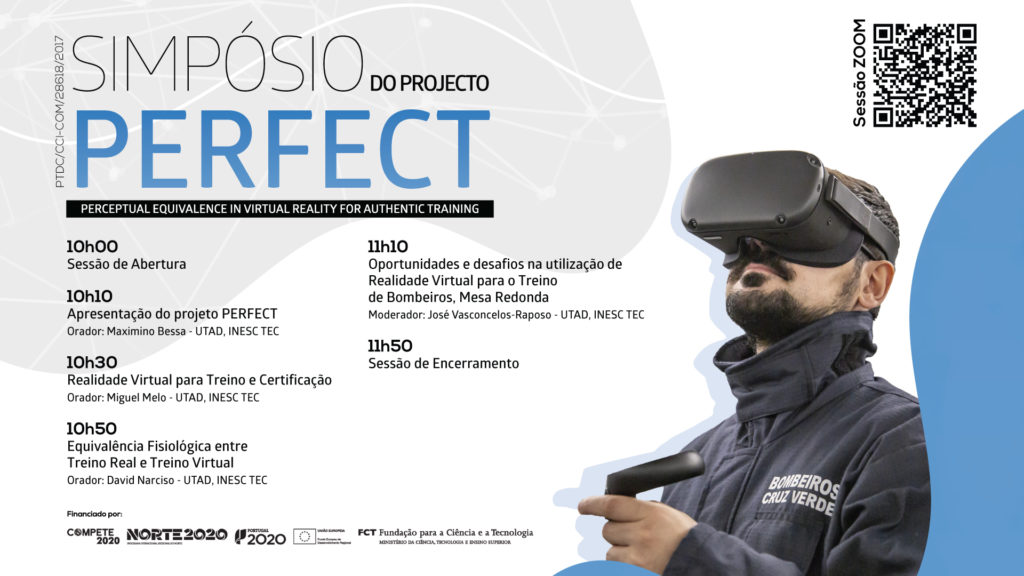
The PERFECT Project Symposium was the last public event of the project where all the project outputs were presented and discussed. The event was held in a hybrid format with the participation of around 50 persons, among them representatives from the Portuguese National School of Firefighters, the Cruz Verde de Vila Real firefighters.
The agenda included a set of presentations to present each activity’s outputs, main conclusions, and future research lines. These presentations were followed by a discussion panel with the topic “Challenges and opportunities for adopting Virtual Reality for firefighting training”.
PERFECT paper distinguished with Professor José Luís Encarnação 2019 award
The prize was awarded to the publication “Impact Of Different Sensory Stimuli On Presence In Credible Virtual Environments” published in the international journal IEEE Transactions on Visualization and Computer Graphics. As the title suggests, the paper focuses on the impact of different stimuli on the sense of presence in virtual environments, a critical topic of the PERFECT project in the pursuit of authentic virtual reality training solutions. The paper can be accessed here.
Seminar: PERFECT – Perceptual Equivalence in virtual Reality For authEntiC environmenTs
A seminar for the Ph.D. students on Informatics of the University of Trás-os-Montes and Alto Douro has been held focusing at promoting and presenting the values of PERFECT project and the benefits of the developed research and technology. The goal was to raise awareness for the impact that research projects can have in real-life situations and inspire the students to take their PhDs to another level and make a difference in everyday life with their research programmes.
Seminar: Virtual Reality Training as a tool to train First Responders
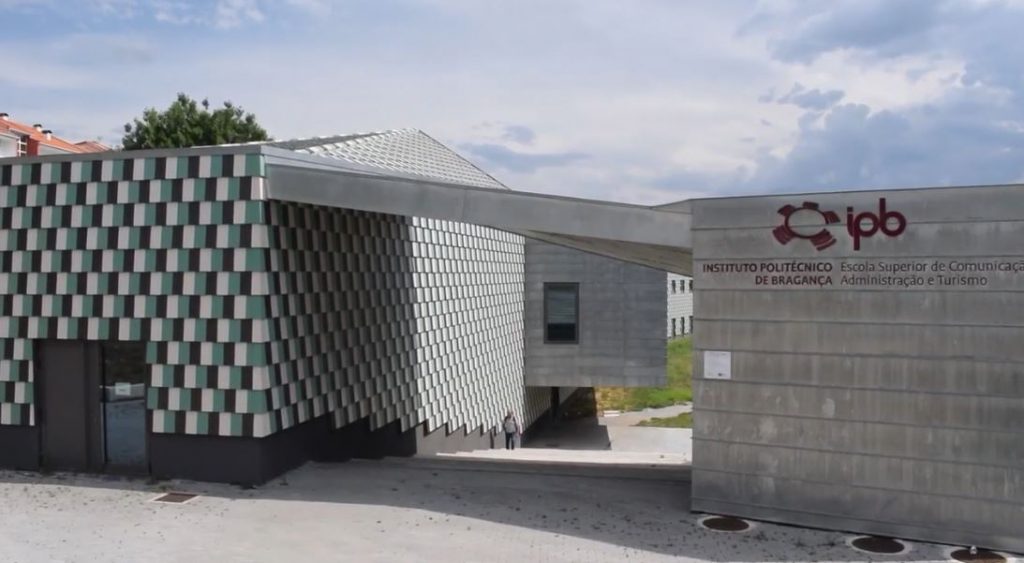
It took place on the Instituto Politécnico de Bragança a seminar entitled “Virtual Reality Training as a tool to train First Responders”. The seminar was attended by students of the degree on Digital Game Design to raise awareness for the importance that Virtual Reality can have for different application fields, namely the training of first responders.
Project Seminar held at Biomedical Engineering Seminars
A seminar to promote the project’s vision and all the research and development progresses and potential was conducted by Professor João Paulo Cunha at Biomedical Engineering Seminars at the Faculty of Engineering of the University of Porto. The event is part of the Doctoral Program in Biomedical Engineering and near 30 students have taken part.
PERFECT Annual Meeting
All the researchers of the project have gathered to present and discuss the project progress and the produced results during the first year. Professor Alan Chalmers was also invited to the meeting as he has been actively involved in researching high-fidelity multisensory virtual environments and his inputs can give critical insights regarding the forthcoming tasks in the project.
Each of the task leaders has performed the presentation of their tasks where all the works and outputs were documented. It was highlighted in the following indicators:
Four publications in international journals
Three publications in international conferences
Virtual reality training scenario: Neutral plan identification
Real-world exercises
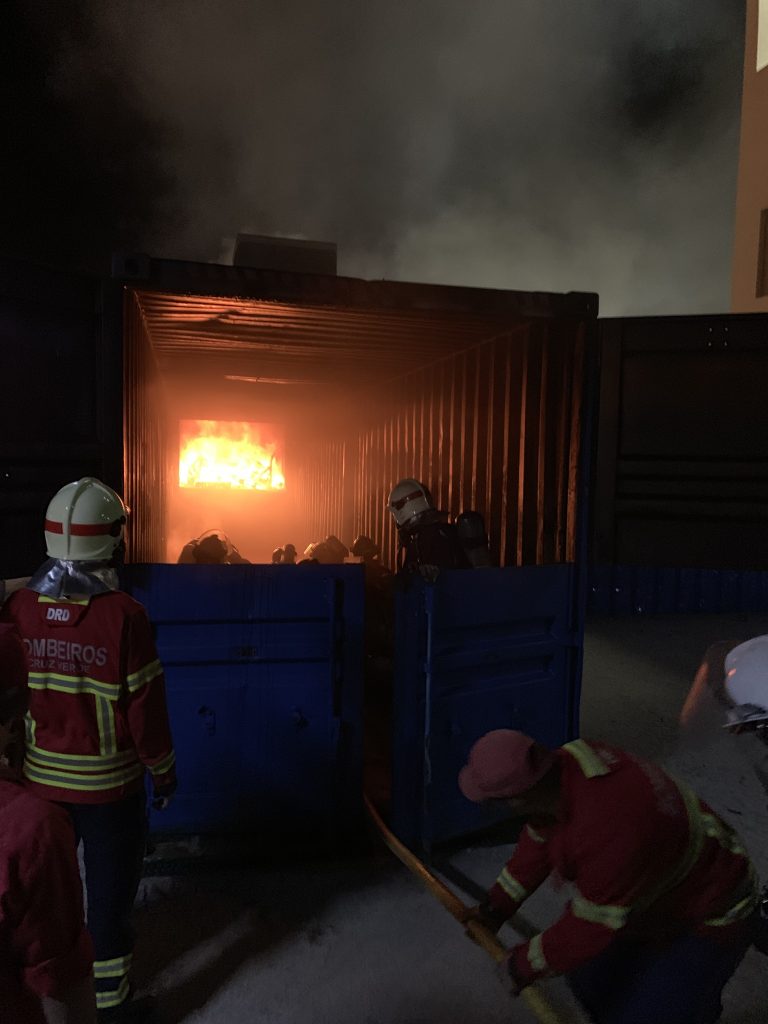
One of the goals of the project is to compare the physiological response of trainees in the real-world training scenario against the virtual reality training scenario. The training was held at the training centre of the “Bombeiros da Cruz Verde de Vila Real”.
Virtual Reality Experiments
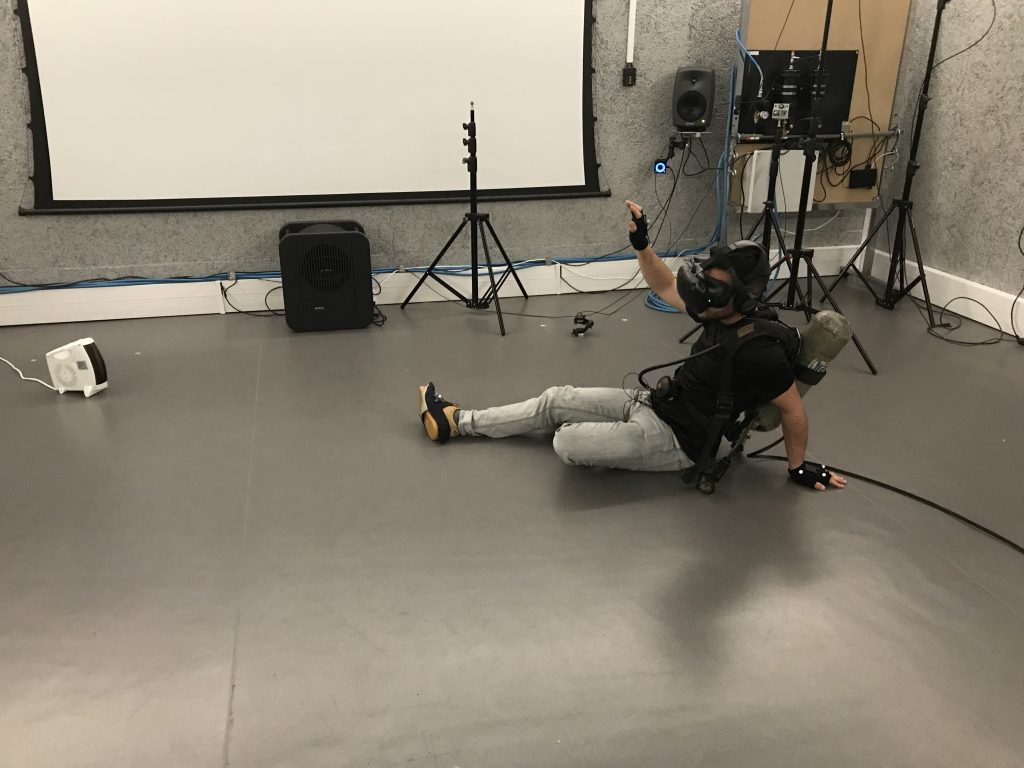
A set of virtual reality-based training experiments was undertaken. In this trial, besides the audiovisual control condition, the experiments have an experimental scenario that considered the delivery of temperature in addition to the audiovisual stimulus. Also, participants had to perform the virtual training with a self-contained breathing apparatus so the virtual experience could be closer to the reality due to the breathing method and the weight of the breathing system.
New prototype: Neutral Plan Identification
The new prototype was developed with the close collaboration of the local corporation of firefighters “Bombeiros Voluntários de Vila Real – Cruz Verde”.
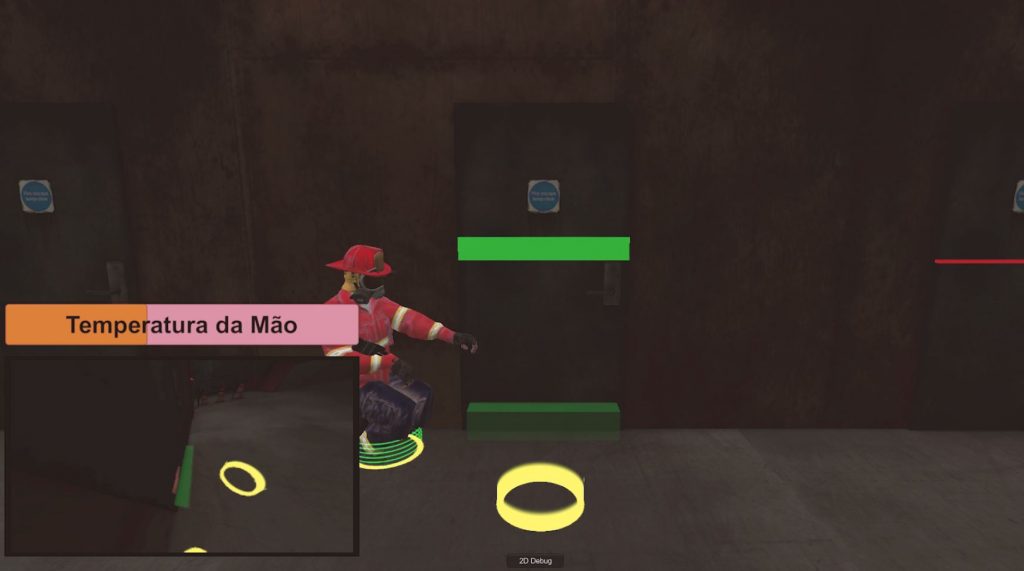
This prototype targets the real-word training scenario of firefighters for neutral plane identification procedure in closed spaces before entering it. For this scenario, the trainee is required to use his/her ability to detect a significant increase in temperature on a closed door. The plane where this temperature difference exists indicates that only below that plane is safe to progress in that closed space as above the temperature will compromise the firefighter’s physical integrity. Alongside the coherent thermal stimulus-only and audiovisual conditions, we also experimented augmenting the thermal stimulus with visual cues. For more information, watch the video of the project’s prototypes on the Results page.
PERFECT Kick-off meeting
Recent evolutions in Virtual Reality (VR) technologies are creating new business opportunities. Training and certification is one area of application that can benefit greatly from these advances and has the potential to become the mainstream approach to training in the future. PERFECT will capitalize its consortium R&D labs prior knowledge in VR, human performance and human physiology wearable sensing into joint efforts to approach this enormous future potential market. It aims to be the first step towards the creation of highly reliable multisensory virtual environments for training and simulation that deliver Perceptually Equivalent stimuli and thus enable the certification of trainees using only VR technologies.
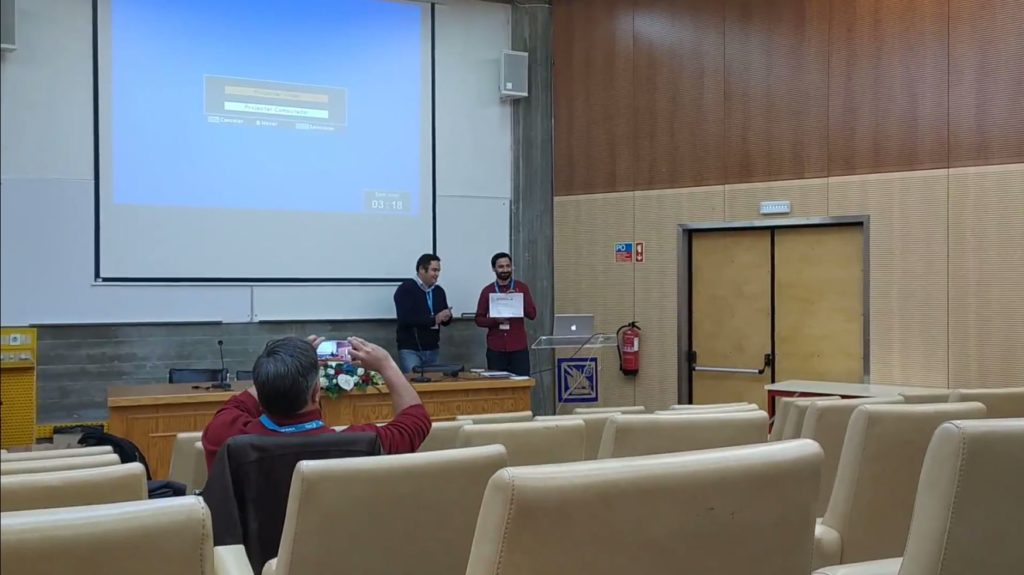
The project’s kick-off meeting has marked the official start of the project and counted with the participation of Professor Alan Chalmers, an expert physically-based, multi-sensory, high-fidelity virtual environments at interactive rates through a combination of parallel processing and human perception techniques.